The Parasympathetic State: What the Body Is Actually Doing When You Finally Slow Down

Most people have a vague understanding that rest is good for them. They know they should sleep more, slow down occasionally, and find ways to decompress. What very few people understand is what the body is actually doing during genuine rest, the specific biological processes that are only possible when the nervous system moves out of alert mode and into something far more restorative.
The human nervous system is divided into two primary branches. The sympathetic nervous system governs what is commonly called the fight-or-flight response. It is the system that activates when you perceive a threat, when you are under pressure, when deadlines arrive and the body needs to mobilize energy quickly. Heart rate increases. Circulation shifts toward the muscles. Digestion slows. Inflammation rises. The immune system goes on standby. The body becomes focused entirely on survival.
The second branch is the parasympathetic nervous system, and it governs the opposite. It is sometimes described simply as rest and digest, but that shorthand barely begins to capture what it actually does. When the parasympathetic system is active and dominant, the body enters a state of restoration. Digestion resumes and becomes efficient. Heart rate slows and stabilizes. Blood pressure decreases. The immune system comes back online and performs its housekeeping functions. Damaged tissue repairs itself. Cellular waste is cleared. Hormones that regulate mood, appetite, and sleep rebalance. Growth and regeneration become possible.
The problem is that modern life is extraordinarily good at keeping the sympathetic system engaged and extraordinarily poor at allowing the parasympathetic system to fully activate. The brain does not distinguish between a physical threat and a psychological one. An unanswered email, a difficult conversation, financial pressure, social comparison, a packed calendar, even the persistent hum of background noise can all keep the sympathetic system switched on at a low level throughout the day. And low-level sympathetic activation that never resolves is not neutral. It accumulates. It becomes the baseline.
When researchers measure cortisol, heart rate variability, and inflammatory markers in chronically stressed populations, the data tells a consistent story. The body remains in a state of readiness that it was never designed to sustain indefinitely. What was meant to be a short-term response to acute threat becomes a chronic operating mode. Sleep feels lighter than it should because the nervous system is still scanning for danger. Digestion becomes irregular because the gut deprioritizes its own function. The immune system, perpetually on alert, begins to misfire. Mood becomes harder to regulate because the prefrontal cortex, the part of the brain responsible for nuanced thinking and emotional balance, is operating with fewer resources. Shifting the nervous system from sympathetic dominance to parasympathetic activation is not simply a matter of sitting down or closing your eyes. The body needs specific signals to understand that it is safe. This is where the research becomes particularly interesting.
The vagus nerve, the longest cranial nerve in the body, serves as the primary conduit between the brainstem and the parasympathetic nervous system. It runs from the base of the skull down through the neck and chest into the abdomen, branching out to touch the heart, the lungs, and most of the digestive organs. When the vagus nerve is stimulated, it sends a signal that is interpreted by the brain as safety. Parasympathetic activity increases. The body begins to shift. Several inputs are known to stimulate vagal tone and activate the parasympathetic response. Slow, diaphragmatic breathing is one. Humming, singing, and cold water on the face are others. Social connection and eye contact with a trusted person can do it. And so can skilled physical touch applied to specific areas of the body. This is not an incidental effect. It is physiologically precise. Research has shown that therapeutic touch increases heart rate variability, which is one of the most reliable indicators of parasympathetic activation, while simultaneously reducing levels of cortisol and pro-inflammatory cytokines.
When the body successfully enters a parasympathetic state, what happens at the cellular level is remarkable. The immune system, no longer operating in emergency mode, activates natural killer cells and T-lymphocytes that target damaged and dysfunctional cells. Cellular repair mechanisms that were suspended during periods of sympathetic activation come back online. The process of autophagy, by which the body dismantles and recycles damaged proteins and organelles, increases in activity. Digestive enzymes release in appropriate concentrations. Gut motility normalizes. The enteric nervous system, which governs the entire digestive process, coordinates its functions without interference from the stress response.
In the brain, blood flow is redistributed away from the threat-detection circuits of the amygdala and toward the prefrontal cortex. The capacity for clear thinking, emotional regulation, and creative problem-solving returns. Serotonin synthesis, which is heavily influenced by gut function and nervous system state, increases. Sleep architecture improves. The glymphatic system, which clears metabolic waste from the brain during sleep, operates more efficiently when the nervous system has been adequately settled before bed.
None of this happens when the body is physically still but mentally wired. The distinction matters enormously, and it is one that most people do not make consciously. Watching television while mentally reviewing the day's conflicts is not parasympathetic rest. Scrolling a phone in silence is not parasympathetic rest. True parasympathetic activation requires the nervous system to receive and process signals that communicate safety at a level below conscious thought.
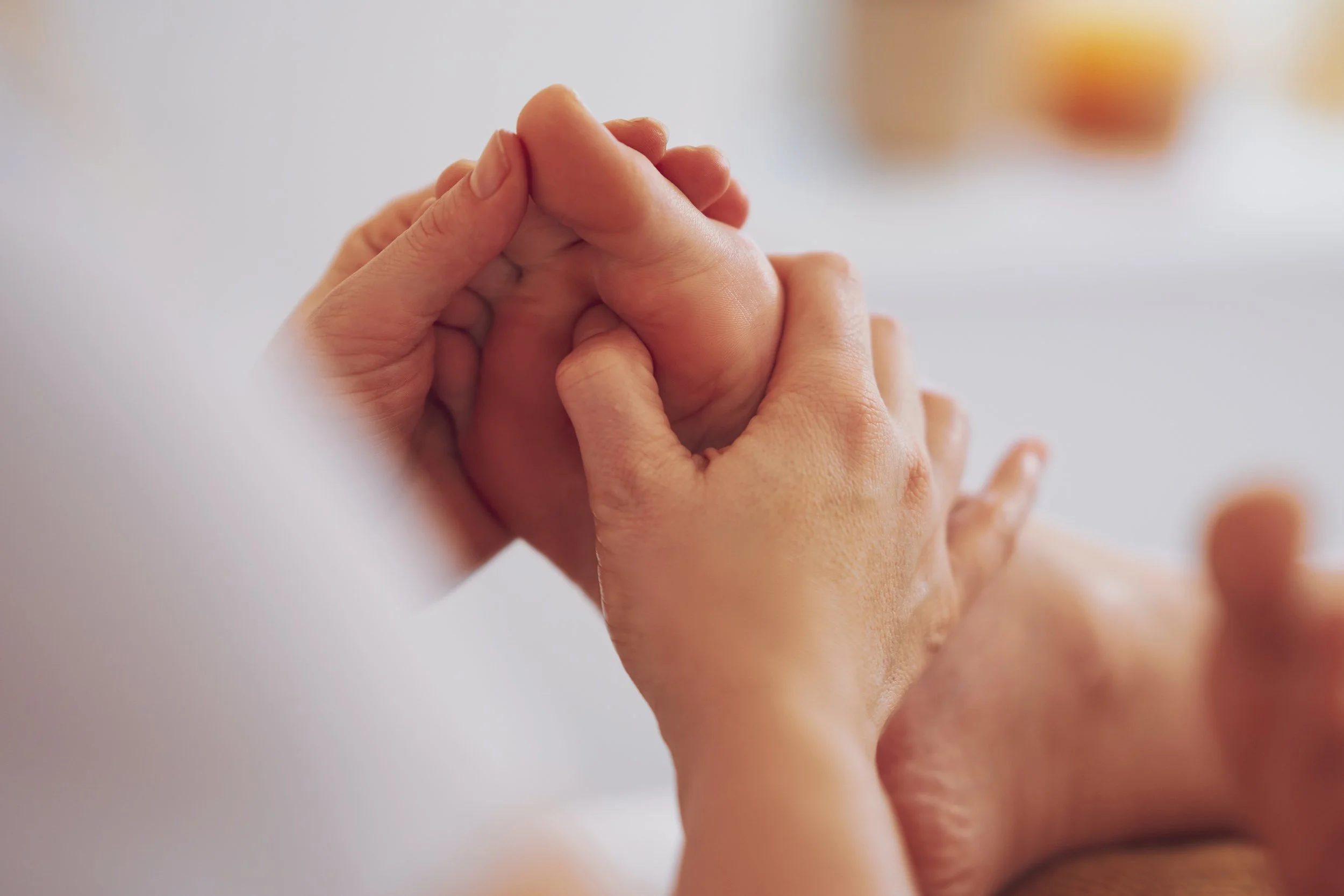
This is part of why reflexology has sustained relevance across cultures and centuries. The practice, which involves applying specific pressure to reflex zones in the feet, hands, and ears that correspond to organs and systems throughout the body, does more than address localized tension. The sustained, skilled application of pressure to the feet engages multiple parasympathetic pathways simultaneously. The feet contain more than 7,000 nerve endings, and the stimulation of those endings sends continuous signals through the nervous system that help facilitate the shift from sympathetic to parasympathetic dominance. Many people experience this as a distinctive kind of release, a physical sensation of unwinding that is qualitatively different from ordinary relaxation.
Studies published in journals including the Journal of Alternative and Complementary Medicine have measured the physiological effects of reflexology and found significant reductions in heart rate, blood pressure, and self-reported anxiety following sessions. What these numbers represent, from a neurological standpoint, is a measurable shift in autonomic balance. The body has moved closer to the state in which healing becomes possible.
Understanding the parasympathetic nervous system changes the way you might think about recovery. It is not enough to simply stop moving. The body needs active signals that it is safe to restore itself. Those signals can come from breath, from silence, from meaningful connection, and from skilled physical care that speaks directly to the nervous system in a language it understands. Most of what the body needs to heal, it already knows how to do. The question is whether the conditions exist for that healing to begin. Creating those conditions is not a luxury. At a biological level, it is how the body survives the cumulative demands of modern life with anything left to give.
If you would like to experience what it means to shift your nervous system and give your body permission to restore itself, a Reflexology or Whole Body Massage session at BAO Foot Spa is a place to start. Services are available at our Beverly Hills and Santa Monica locations. You can explore the menu or book an appointment now.