The Body's Quiet Alarm: How Reflexology Can Help Rebalance a Stressed Nervous System
Stress has become so normalized in modern life that most of us have stopped questioning it. We accept the tight shoulders, the shallow breathing, the racing thoughts that follow us into bed. We reach for coffee in the morning and melatonin at night, and somewhere in between we try to hold it all together. What is rarely discussed, though, is what chronic stress is quietly doing to the body at a biological level, and how returning to something as grounded and intentional as touch may be one of the most underestimated tools we have for reclaiming equilibrium.
When the Nervous System Stays in Alert Mode
The human stress response is, by design, a survival mechanism. When the brain perceives a threat, real or imagined, the sympathetic nervous system fires up. Cortisol and adrenaline flood the bloodstream. The heart rate increases. Muscles tense. Digestion slows. The body mobilizes every resource it has toward the perceived danger.
For our ancestors, this was a short-lived response: sprint from the predator, return to safety, and allow the body to recover. In contemporary life, however, the threats rarely resolve that cleanly. Deadlines, financial pressure, overstimulation, and social obligation keep the sympathetic nervous system in a state of near-constant activation. The body never fully returns to rest. Over time, this sustained arousal takes a toll: impaired sleep, elevated blood pressure, disrupted digestion, weakened immune function, and a diminished capacity for the kind of focused, restorative calm that is essential to wellbeing.
The Parasympathetic Pathway
Recovery from stress depends on the parasympathetic nervous system, sometimes described as the "rest and digest" counterpart to the sympathetic "fight or flight" response. When the parasympathetic system takes over, heart rate slows, breathing deepens, cortisol levels begin to fall, and the body can carry out the repair work it cannot do while under siege.
The challenge is that for many people, particularly those living with chronic stress, the transition from sympathetic to parasympathetic activation is difficult to make consciously. The nervous system has, in a sense, forgotten how to let go. This is where therapeutic touch, and specifically reflexology, enters the picture. Gentle, sustained pressure on specific points of the foot appears to signal the nervous system in ways that encourage this shift toward calm.
What Reflexology Actually Does
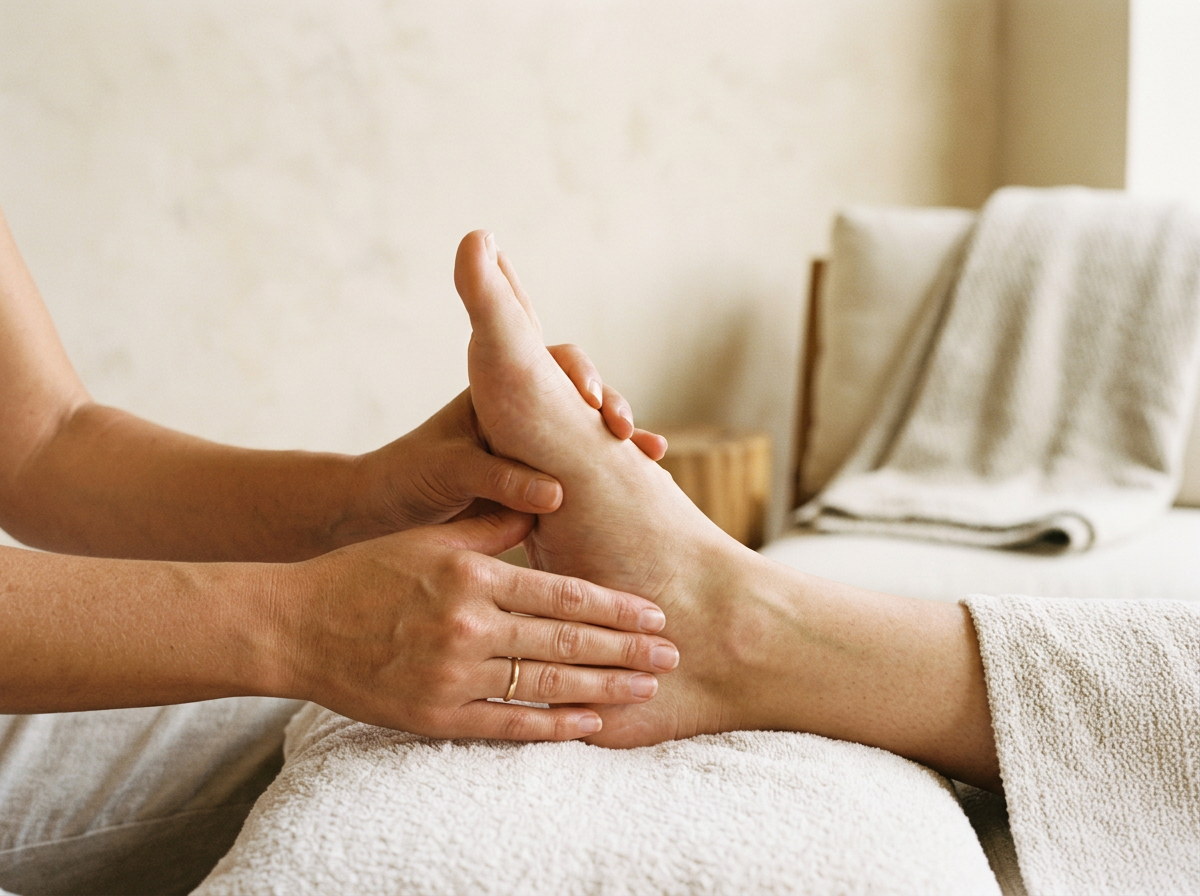
Reflexology is a structured form of manual therapy based on the principle that the feet, hands, and ears contain a map of the entire body. Specific zones on the foot correspond to organs, glands, and body systems. Applying deliberate, graduated pressure to these zones is thought to stimulate associated pathways, encourage circulation, and support the body's own regulatory processes.
In the context of stress, the most relevant zones include the solar plexus reflex, located near the center of the arch, which is understood to be the body's tension center and one of the primary focal points when addressing anxiety and emotional overload. The adrenal reflex, positioned just above the arch toward the inside edge of the foot, corresponds to the glands responsible for cortisol and adrenaline production. Work on these points is not incidental to a foot session; it is at the core of any serious reflexology treatment designed with stress management in mind.
What the Research Shows
The scientific literature on reflexology is still developing, and practitioners of evidence-based medicine rightly note that large-scale, rigorous trials remain limited. What does exist, however, is meaningfully encouraging. A systematic review and meta-analysis published in the peer-reviewed literature, which examined 42 randomized controlled trials involving nearly 4,000 participants, found that foot reflexology produced significant improvements in sleep disturbances, a finding that is closely tied to the body's ability to regulate the stress response. Participants receiving foot reflexology were substantially less likely to report sleep problems after intervention compared to control groups.
Research published in the Journal of Integrative Medicine suggests that gentle, sustained foot pressure can promote a shift in autonomic nervous system tone, moving the body from sympathetic dominance toward parasympathetic activation. This mechanism, if supported by further study, would go a long way toward explaining what so many people report after a reflexology session: a sense of calm that feels less like relaxation and more like genuine physiological release.
Studies involving patients with anxiety-related conditions have also shown measurable reductions in self-reported anxiety scores following reflexology sessions. While the mechanisms behind these effects are still being explored, researchers point to the potential role of endorphin release, improved circulation, and a reduction in muscular and fascial tension that accumulates in the feet from prolonged stress. Sources: Hub TMU Systematic Review & Meta-Analysis (2019), Journal of Integrative Medicine, EBSCO Research Starters: Reflexology
The Case for Regular Treatments
Like most things that genuinely support health, the benefits of reflexology are cumulative. A single session may produce a noticeable shift in how the body feels, and for many people, even one treatment offers a kind of reset that is difficult to achieve through other means. But the deeper value of reflexology as a stress management tool comes with consistency. Regular sessions help train the nervous system to return to a baseline of calm more readily, reducing the amount of time the body spends in a state of chronic activation.
This is particularly relevant for individuals whose stress is structural rather than situational: executives carrying significant responsibility, caregivers, parents of young children, people working in high-pressure industries. For these clients, reflexology is less about treating a single episode of tension and more about building a sustainable practice of nervous system support.
A Note on Integration
Reflexology is a complementary therapy, meaning it works best alongside, not instead of, other strategies for managing stress. Good sleep hygiene, movement, nutrition, breathwork, and professional mental health support all play roles that reflexology does not replace. What it does offer is a dimension of care that is often missing from even the most thoughtfully constructed wellness routine: intentional, skilled touch that addresses the body directly and gives the nervous system a clear signal to stand down. At BAO FOOT SPA, each reflexology session is designed with this intention. Our treatments go beyond surface relaxation, working systematically through the reflex zones of the foot to support the body's own capacity for balance. Whether you choose a focused 30-minute session or one of our extended treatments that combines foot reflexology with body massage, the goal is the same: to give your nervous system the restoration it is quietly waiting for.
Book a Session at BAO FOOT SPA
BAO FOOT SPA is located in Santa Monica and Beverly Hills. To book a reflexology session or learn more about our treatment menu, visit baofootspa.com or call your nearest location.
This article is intended for informational purposes only and does not constitute medical advice. Please consult a qualified healthcare professional for guidance related to your individual health needs