The Breath as Medicine: What Science Has Discovered About Intentional Breathing
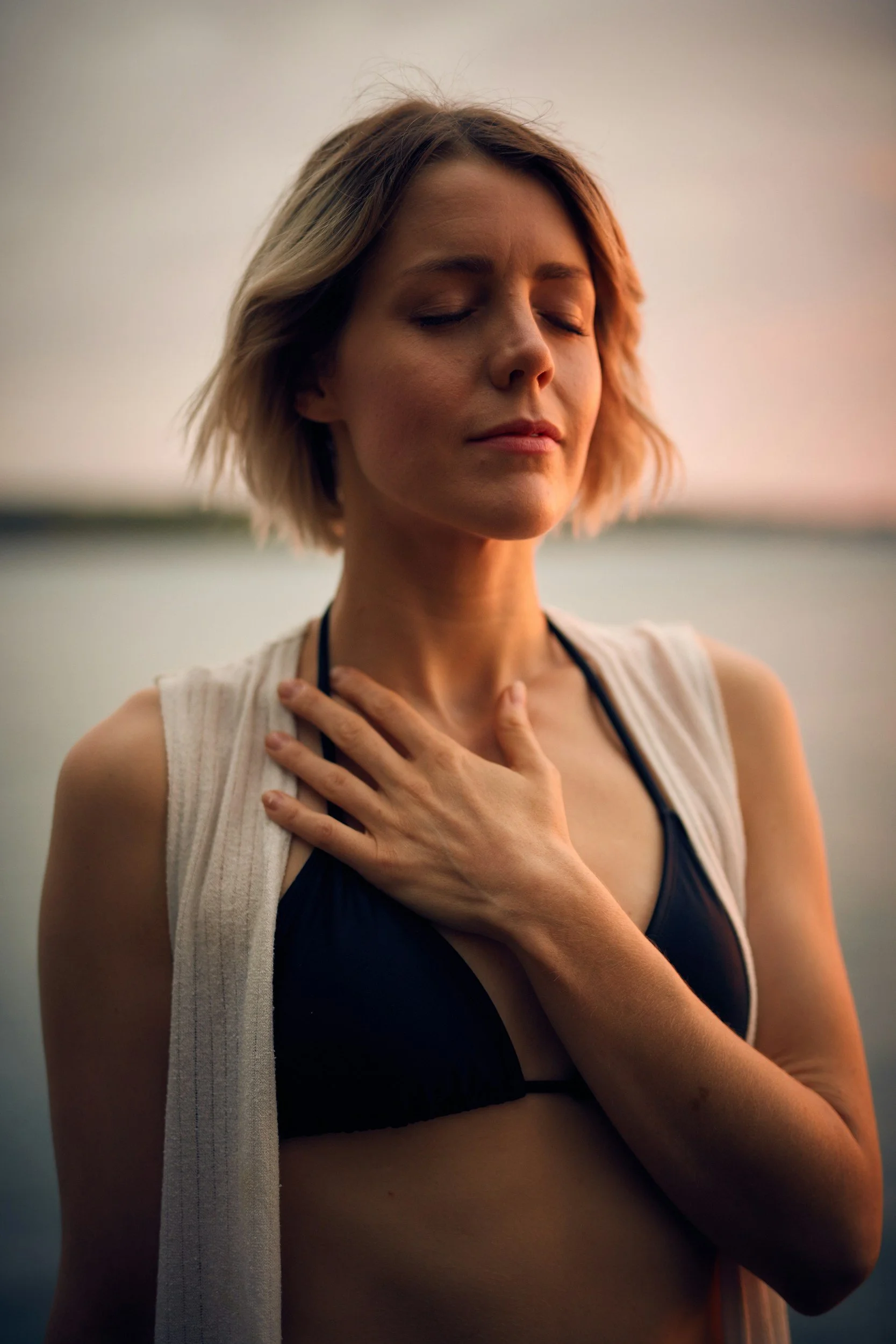
Of the thousands of things your body does without asking permission, breathing is unique. Your heart beats, your kidneys filter, your liver processes, your immune system patrols, all of it happening in the background without any conscious direction from you. Breathing, however, occupies a rare middle ground. It is simultaneously automatic and voluntary. You can let it run on its own, or you can choose, in any moment, to take full control of it. That duality is not incidental. It is the key to one of the most accessible and underutilized tools in human health.
The science of intentional breathing has moved well beyond the realm of meditation studios and yoga retreats. Over the past decade, a growing body of clinical research has demonstrated that deliberate control of the breath can measurably alter heart rate, blood pressure, stress hormone levels, immune function, focus, and emotional regulation. A landmark 2023 study from Stanford University compared three different controlled breathing techniques against mindfulness meditation and found that the breathing practices produced greater reductions in anxiety and greater improvements in mood over just a four-week period. The researchers concluded that structured breathwork may be among the most efficient interventions available for nervous system regulation.
Why the Breath Has Such Power
To understand why something as simple as how you breathe can have such wide-ranging effects, it helps to understand a piece of anatomy. The vagus nerve is the longest cranial nerve in the body and the primary conduit of the parasympathetic nervous system, the branch responsible for rest, digestion, recovery, and repair. It travels from the brainstem through the neck, chest, and abdomen, touching nearly every major organ along the way. And it is intimately connected to the diaphragm and the lungs.
When you breathe slowly and deeply into the belly, particularly when you emphasize a long, extended exhale, you stimulate the vagus nerve directly. This sends a signal to the brain that the environment is safe, that the threat has passed, and that the body can shift its resources away from survival and toward repair. Heart rate slows. Blood pressure drops. Cortisol production decreases. The prefrontal cortex, the part of the brain responsible for clear thinking and emotional regulation, becomes more active. The effect is measurable, repeatable, and remarkably fast.
In contrast, shallow, chest-based breathing, which is the default pattern for most adults under stress, keeps the sympathetic nervous system engaged. It signals low-grade danger to the brain even when none exists, reinforcing a cycle of tension that many people carry without realizing it. Chronic shallow breathing is associated with elevated anxiety, poor sleep, heightened pain sensitivity, and impaired cardiovascular function. Research published in the Journal of Neurophysiology has described this pattern as a self-reinforcing loop: stress produces shallow breathing, and shallow breathing produces more stress.
The Research Behind Specific Techniques
Not all breathwork is the same. Different patterns of inhalation, exhalation, and pause produce different physiological effects, and researchers have become increasingly precise about what each technique actually does.
The physiological sigh, a technique studied extensively at Stanford's Department of Psychiatry and Behavioral Sciences, involves a double inhale through the nose followed by a slow, complete exhale through the mouth. Researchers found that even a single physiological sigh is enough to offload carbon dioxide from the lungs more effectively than a standard breath, bringing the body back toward calm within seconds. It is, in essence, what the body does naturally during periods of deep sleep or after intense emotion, and doing it intentionally amplifies those effects on demand.
Box breathing, a technique used by military personnel, surgeons, and high-performance athletes, involves inhaling for four counts, holding for four, exhaling for four, and holding again for four. A 2018 study published in Frontiers in Psychology found that box breathing significantly reduced anxiety and improved cognitive performance in emergency care professionals during high-stress situations. The equal ratio between inhalation, retention, and exhalation appears to bring the autonomic nervous system into a state of balance rather than pushing it heavily in one direction or the other.
Coherence breathing, sometimes called resonance breathing, involves breathing at a rate of approximately five to six breath cycles per minute, far slower than the average adult resting rate of twelve to eighteen. Research from the HeartMath Institute has shown that this pattern creates a state of heart rate variability coherence, meaning the heart, lungs, and nervous system begin to oscillate in synchrony. In this state, cognitive function improves, emotional reactivity decreases, and immune markers show measurable improvement. A 2019 study published in Applied Psychophysiology and Biofeedback found that just ten minutes of coherence breathing per day, maintained over eight weeks, produced significant reductions in perceived stress and depressive symptoms.
Breath and the Body in Summer
There is a particular reason to think about breathwork as summer deepens. Heat places real physiological demands on the body. As temperatures rise, the cardiovascular system works harder, blood is redirected toward the skin for cooling, and the body's regulatory systems operate under greater load. This background effort can amplify existing stress patterns, push shallow breathing deeper, and leave people feeling more drained, more reactive, and less resilient than they expected.
Research has also shown that heat exposure increases respiratory rate, which tends to shift breathing further up into the chest and away from the diaphragm. For anyone already managing elevated cortisol, disrupted sleep, or accumulated fatigue, the summer heat can compound what is already a system under strain. A brief daily breathwork practice during the cooler hours of morning or evening offers a low-effort, high-return counterbalance to that physiological load. The nervous system does not require a long session to respond. Five focused minutes is often enough to shift the internal state in a meaningful way.
How to Begin a Practice
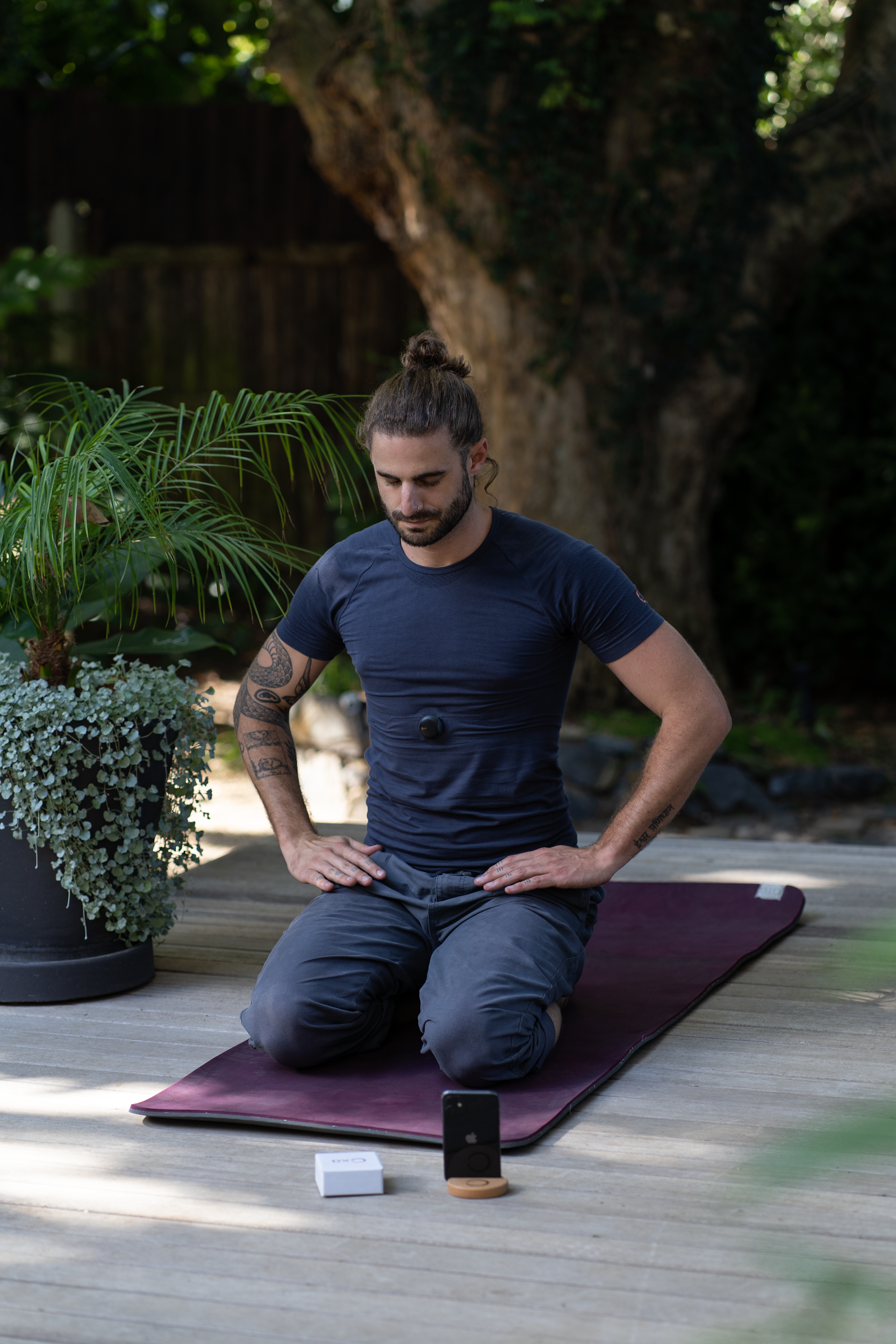
The barrier to entry for breathwork is exceptionally low. No equipment is required, no particular level of fitness, and sessions can be as short as five minutes. The most important variable is consistency rather than duration. Research consistently shows that the benefits of intentional breathing accumulate over days and weeks, not hours. The nervous system adapts gradually, becoming more responsive to the calming signals of slow exhalation and more capable of returning to equilibrium after stress.
A straightforward starting point is to set aside five to ten minutes at a consistent time each day, ideally in the morning or before sleep, and practice coherence breathing at a pace of about five to six breath cycles per minute. A four-second inhale through the nose followed by a six-second exhale through the mouth, with no holding, is a simple approximation of this rhythm that most people find easy to sustain without external guidance. The emphasis should always be on the exhale. A longer out-breath is what activates the parasympathetic response, and the body responds to it with surprising reliability.
For those who want to deepen the effect, breathwork pairs particularly well with therapeutic bodywork. Reflexology works through many of the same pathways, activating the parasympathetic nervous system, reducing cortisol, and encouraging the body to shift from a state of alert to a state of restore. Many clients at BAO find that arriving at a session having already spent a few minutes breathing intentionally noticeably deepens the relaxation response, because the nervous system is already primed to receive it. Both practices speak the same physiological language. The breath initiates the shift, and skilled therapeutic touch sustains and extends it.
What the research ultimately reveals is that the breath is not a passive background process. It is an active lever, one that sits at the intersection of the voluntary and the involuntary, the conscious and the automatic. Learning to use it with intention is not a wellness trend. It is a return to something the body already knows how to do, one breath at a time.
To book a reflexology or body massage session at BAO Foot Spa in Beverly Hills or Santa Monica, visit baofootspa.com.
Sources
Balban, M.Y., et al. (2023). Brief structured respiration practices enhance mood and reduce physiological arousal. Cell Reports Medicine, 4(1). Stanford University. Zaccaro, A., et al. (2018). How breath-control can change your life: A systematic review on psycho-physiological correlates of slow breathing. Frontiers in Human Neuroscience, 12, 353. McCraty, R., & Shaffer, F. (2015). Heart rate variability: New perspectives on physiological mechanisms, assessment of self-regulatory capacity, and health risk. Global Advances in Health and Medicine, 4(1). Steffen, P.R., et al. (2019). The impact of resonance frequency breathing on measures of heart rate variability, blood pressure, and mood. Frontiers in Public Health, 5, 222. Jerath, R., et al. (2006). Physiology of long pranayamic breathing: Neural respiratory elements may provide a mechanism that explains how slow deep breathing shifts the autonomic nervous system. Medical Hypotheses, 67(3).