Cupping, Gua Sha, and Reflexology…What Is the Difference and which one Is Right for You
Introduction
As interest in holistic and traditional healing continues to grow, many people encounter therapies like cupping, gua sha, and reflexology for the first time. These practices often appear together on wellness menus and are sometimes spoken about interchangeably. In reality, they are very different in how they work, what they affect, and what they are designed to support.
Each of these therapies has deep historical roots and developed within medical systems that viewed the body as interconnected rather than divided into isolated parts. Understanding the difference between them is not about choosing what is better. It is about choosing what is appropriate for the body’s current state and needs.
Shared Origins in Traditional Healing
Cupping, gua sha, and reflexology all emerged from traditional systems of medicine that emphasized balance, circulation, and regulation rather than symptom suppression. In Traditional Chinese Medicine, health is understood as the result of balanced circulation of energy and blood. When flow becomes restricted or stagnant, discomfort or dysfunction may follow.
Manual therapies were developed as ways to influence this circulation and support the body’s natural regulatory processes. This shared philosophy explains why cupping, gua sha, and reflexology are often grouped together, even though their techniques and effects differ significantly.
What Is Cupping
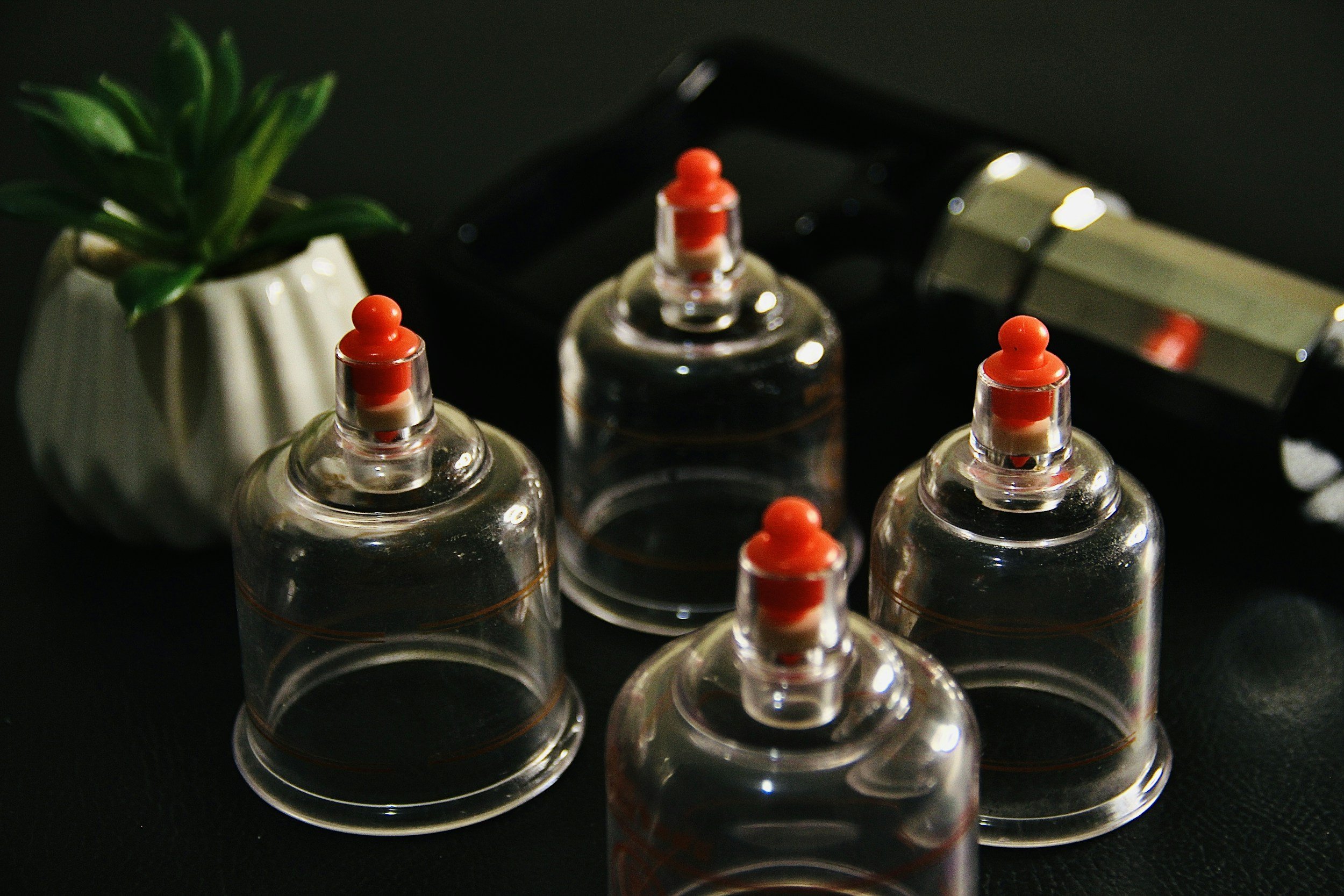
Cupping therapy involves placing cups on the skin to create suction. Historically, these cups were made from materials such as bamboo, horn, or ceramic. Modern cupping commonly uses glass or silicone cups that allow for controlled suction.
The suction created by cupping lifts tissue upward and draws blood and fluid toward the surface. Rather than pressing into muscles, cupping works through decompression. This can help increase circulation and create a sense of release in areas that feel dense, tight, or restricted. Some people experience temporary circular marks on the skin, which are not bruises in the traditional sense but rather a result of increased blood flow near the surface.
Harvard Health Publishing notes that cupping may help relieve muscle tightness and support circulation, though research is still developing and individual responses can vary.
What Is Gua Sha
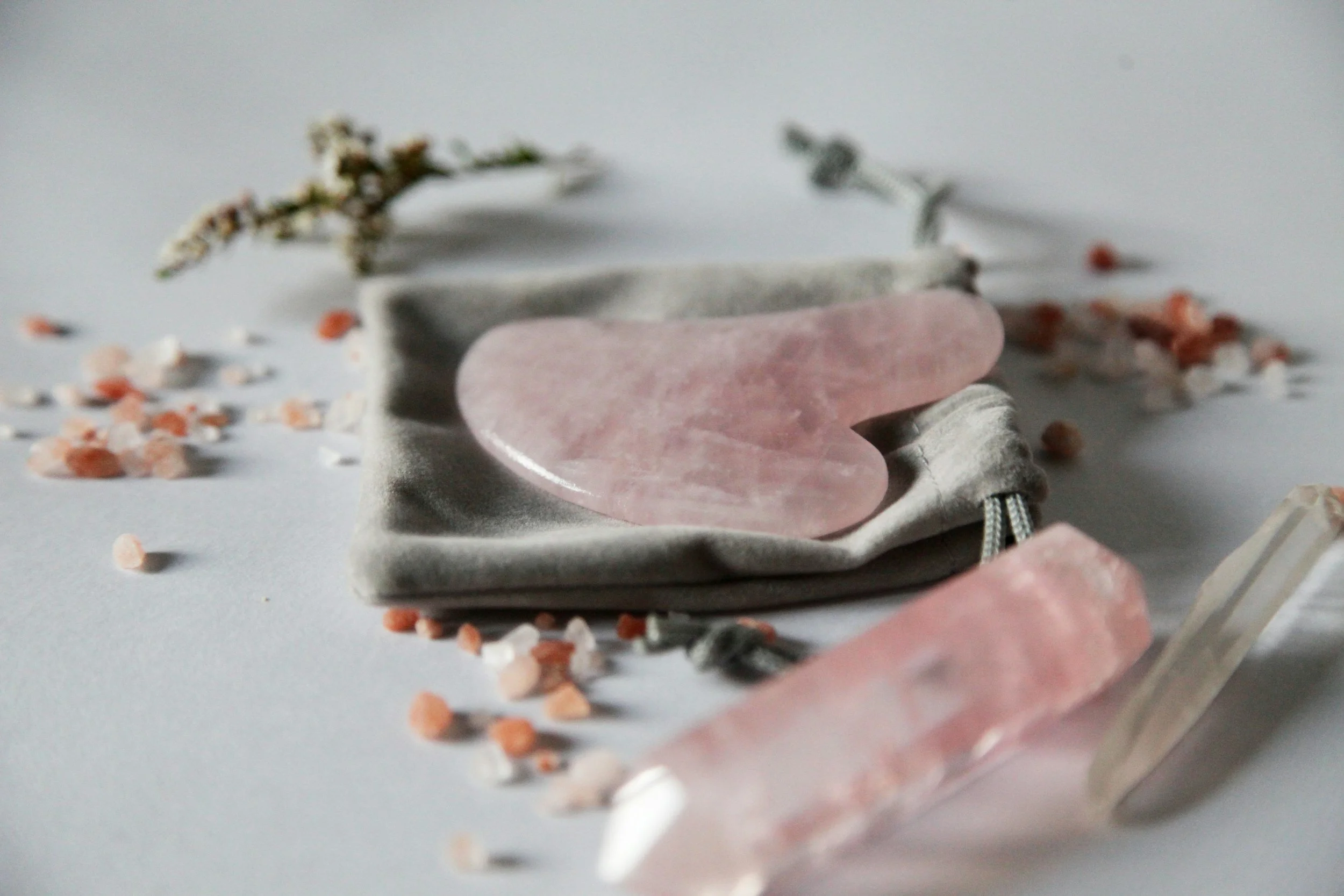
Gua sha is a technique that uses a smooth edged tool to apply repeated strokes along the skin. Traditional tools were made of jade, stone, or horn, while modern tools may also include stainless steel or other materials.
Gua sha works through friction rather than suction. The repeated strokes stimulate circulation, support lymphatic movement, and help release surface level tension or adhered tissue. It is commonly used on the neck, shoulders, back, and face. Facial gua sha has become especially popular because of its gentle approach and visible effects on circulation and skin tone.
Research published in the Journal of Traditional Chinese Medicine suggests that gua sha increases microcirculation and may help reduce inflammation and muscular tension. When performed gently, it typically does not leave lasting marks, though temporary redness or warmth may occur.
What Is Reflexology

Reflexology focuses on applying precise pressure to specific points on the feet, hands, or ears. These points are believed to correspond to organs and systems throughout the body. Unlike cupping and gua sha, reflexology does not work directly on the area of discomfort. Instead, it works indirectly through reflex points that influence the body as a whole.
Reflexology is based on the idea that the body is mapped onto the feet and hands. Applying pressure to these points is believed to support nervous system regulation, circulation, and internal balance. Many people experience reflexology as deeply calming, with effects that extend beyond the physical sensations in the feet or hands.
The Cleveland Clinic notes that reflexology may help reduce stress and promote relaxation when used as a complementary practice. It is generally gentle and does not create visible marks on the body.
Key Differences
Although cupping, gua sha, and reflexology share philosophical roots, their methods and effects are distinct. Cupping works through suction and decompression, while gua sha works through surface stimulation and friction. Reflexology uses targeted pressure on mapped reflex points rather than working directly on tissue.
Cupping and gua sha primarily influence muscles, fascia, and circulation in specific areas of the body. Reflexology primarily supports nervous system regulation and systemic balance. Understanding these differences can help guide more intentional choices.
Choosing the Right Therapy
There is no single therapy that works best for everyone or every situation. Cupping may be helpful when muscles feel heavy, tight, or restricted. Gua sha may be more appropriate when there is surface tension, stiffness, or limited mobility. Reflexology may be especially supportive when stress, fatigue, or overall imbalance is present.
The World Health Organization recognizes traditional manual therapies as complementary approaches that can support overall wellbeing when used alongside conventional care. Paying attention to how your body responds is often more informative than focusing on labels or trends.
Why These Therapies Still Matter Today
In a modern world dominated by screens, speed, and constant stimulation, hands on therapies offer something essential. They slow the nervous system, restore sensory awareness, and reintroduce human presence. While technology can simulate pressure or vibration, it cannot replicate the responsiveness and attunement of skilled human touch.
These practices continue to matter because the body still needs what it has always needed. Circulation, regulation, and connection remain foundational to wellbeing, regardless of how advanced society becomes.
Conclusion
Cupping, gua sha, and reflexology may share ancient roots, but they serve different purposes. Understanding their differences allows for more informed and thoughtful choices. Rather than asking which therapy is best, a more useful question may be what the body needs right now.
Sometimes the body needs release. Sometimes it needs stimulation. Sometimes it needs rest. These therapies endure because they honor the body as a whole, and that perspective remains relevant regardless of trends.