Starting the New Year With Less Noise
Introduction
The New Year often arrives with urgency.
New goals. New habits. New routines. New versions of ourselves, supposedly waiting to be activated.
But before adding anything new, there is another option. One that is quieter, slower, and often more effective.
Remove the noise.
A New Year digital reset is not about deleting apps or abandoning technology. It is about creating space. Space for attention to return. Space for the nervous system to settle. Space for clarity to emerge before momentum takes over.
In a culture that treats January as a starting gun, choosing stillness first can be a powerful act of care.
The Body Does Not Experience the New Year as a Clean Slate
Calendars reset. Bodies do not.
The nervous system enters the New Year carrying the residue of the months before it. Holiday schedules. Travel. Emotional intensity. Social obligations. Late nights. Irregular routines. Constant stimulation.
According to Harvard Health Publishing, prolonged periods of stress and overstimulation can keep the nervous system in a heightened state well beyond the original trigger. Recovery requires intentional signals of safety and rest.
A digital reset provides those signals.
Before asking the body to change, it helps to let it land.
Why January Is an Ideal Time to Reduce Digital Noise
The beginning of the year offers a rare pause. Not because life slows automatically, but because culturally, there is permission to reflect.
This makes January an ideal time to evaluate how technology is shaping attention, energy, and emotional regulation.
Research published in Frontiers in Psychology suggests that reducing digital input can improve focus, lower anxiety, and support emotional balance. Participants in digital reduction studies often report improved sleep and a greater sense of presence within days.
The nervous system responds quickly when stimulation decreases.
January does not need more input. It needs integration.
A New Year Reset Without Pressure
Traditional New Year resolutions often rely on discipline and restriction. Digital detox offers a different entry point.
Instead of asking, “What should I add?” The question becomes, “What can I remove?”
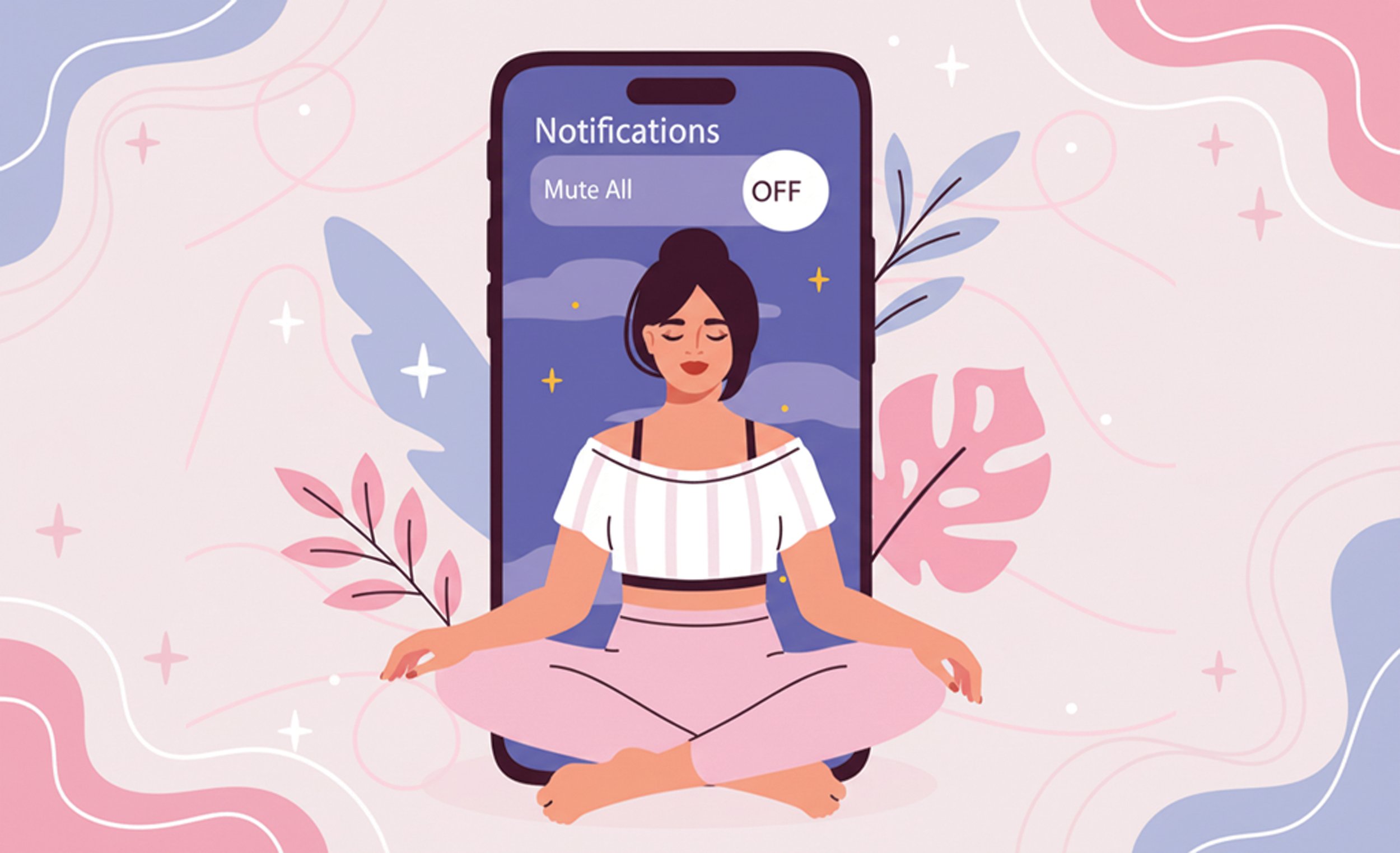
Removing constant notifications. Removing unnecessary scrolling. Removing the pressure to always be reachable.
This creates a form of reset that does not demand willpower. It invites relief.
The Cleveland Clinic emphasizes that sustainable stress reduction comes from consistent, manageable changes rather than dramatic overhauls. A digital reset fits this model.

What a New Year Digital Reset Can Look Like
A digital reset does not need to be extreme. It needs to be intentional.
Many people find benefit in starting the year with small, clearly defined boundaries.
Designating phone free mornings or evenings Keeping devices out of the bedroom Turning off nonessential notifications Creating screen free meals or walks Setting limits on news and social media consumption
These boundaries create rhythm. Rhythm supports regulation.
Over time, the body learns that not every moment requires response.
Why Less Stimulation Creates More Clarity
Constant digital input fragments attention. It pulls the mind outward and away from internal cues.
When stimulation decreases, something subtle happens. Sensation becomes more noticeable. Breath deepens. Thoughts slow. Awareness turns inward.
The World Health Organization has emphasized the importance of mental rest for long term cognitive health. Attention recovery supports memory, emotional resilience, and decision making.
In this way, digital detox supports not only calm, but clarity. It creates the conditions for meaningful intention rather than reactive goal setting.
The New Year Is About Capacity, Not Control
Many people enter January focused on control. Control habits. Control outcomes. Control time.
But the body responds better to capacity.
How much stimulation can I handle right now How much information feels supportive How much quiet do I need before moving forward
A digital reset increases capacity by reducing unnecessary demand.
When the nervous system feels safe, motivation returns naturally. Focus improves. Energy becomes available.
This is why doing less at the beginning of the year often leads to more sustainable progress later.
Reframing the New Year Reset
A digital reset reframes the New Year as a time of listening rather than fixing.
It allows the body and mind to reconnect before change is introduced. It shifts the focus from performance to presence.
Rather than asking who you want to become this year, the question becomes how you want to feel while becoming.
Calm Present Supported Clear
These states create a foundation that discipline alone cannot.
Conclusion
The New Year does not need to begin with intensity. It can begin with quiet.
A digital reset is not about rejecting modern life. It is about choosing how and when to engage with it.
By starting the year with less noise, the nervous system has room to settle. Attention has space to return. Intention becomes clearer.
In a culture that equates change with effort, choosing simplicity is a powerful beginning.
Sometimes, the most meaningful New Year resolution is not to do more, but to listen more closely.