The Lymphatic System: Your Body's Hidden Detox Network
Every spring, there is a collective impulse to refresh. People overhaul their diets, renew their exercise routines, and clear their homes of accumulated clutter. Yet one of the most important systems in the human body rarely makes it onto that list. The lymphatic system, a vast and intricate network running alongside the circulatory system, is the body's primary detoxification and immune surveillance infrastructure. It is largely invisible in daily life, and that invisibility may be precisely why it is so often overlooked. Understanding how this system functions, why it can become compromised, and what supports its optimal performance is one of the more meaningful things you can do for your long-term health.
What the Lymphatic System Actually Does
The lymphatic system is a network of tissues, organs, and vessels that stretches throughout the entire body. Its primary job is to collect excess fluid, waste products, and cellular debris from the body's tissues and transport them back to the bloodstream for elimination. Along the way, lymph fluid passes through lymph nodes, small bean-shaped structures that filter harmful substances and house the white blood cells responsible for identifying and neutralizing bacteria, viruses, and abnormal cells. The lymphatic system is, in this sense, the body's internal sanitation and security department operating around the clock.
Unlike the cardiovascular system, the lymphatic network has no dedicated pump. The heart contracts thousands of times a day to drive blood through the body, but lymph fluid has no such engine. Instead, it depends on the contraction of surrounding skeletal muscles, the rhythm of breathing, and the intrinsic contraction of lymphatic vessel walls to keep fluid moving. Research published in the Journal of Physiology has confirmed that lymph propulsion relies on both intrinsic smooth muscle contractions within lymphatic vessels and extrinsic mechanical forces generated by movement and respiration. When movement decreases, so does lymphatic flow, and that is where the problems often begin.
Why Modern Life Can Slow the System Down
The conditions that characterize modern daily life are not particularly favorable to lymphatic health. Prolonged sitting, reduced physical movement, chronic low-grade stress, disrupted sleep, and diets high in processed and inflammatory foods all place a burden on the lymphatic system while simultaneously reducing its capacity to function well. Chronic stress, in particular, causes the body to remain in a state of low-level activation that suppresses immune function and impairs the normal rhythms of fluid clearance. The result, over time, is a system that is working harder with fewer resources and less mechanical support.
Spring compounds this picture in a specific way. After months of reduced outdoor activity, heavier foods, and the physiological compression that cold weather tends to bring, many people arrive at April carrying what might be described as accumulated metabolic load. The body is primed for renewal, but the lymphatic system may need some deliberate encouragement to meet the season's momentum.

Recognizing When the Lymphatic System Needs Attention
The lymphatic system does not announce its distress loudly. Its signals tend to be subtle and easy to attribute to other causes. Persistent puffiness or swelling in the limbs, particularly in the lower legs and feet, is one of the most common indicators of sluggish lymphatic drainage. Fatigue that persists despite adequate sleep, recurring infections or a general sense of immune vulnerability, skin that appears dull or congested, and a feeling of heaviness or stiffness upon waking are all patterns worth taking seriously. None of these symptoms are diagnostic on their own, but taken together, they can point to a lymphatic system that is working below its potential.
Evidence-Based Ways to Support Lymphatic Flow
The most effective and accessible tool for supporting lymphatic circulation is physical movement. Walking, swimming, yoga, and rebounding on a small trampoline are all particularly well suited to stimulating lymphatic flow, as they engage large muscle groups in rhythmic, repetitive patterns that drive fluid through the lymphatic vessels. Research published in MDPI's journal on physiology and biomechanics has highlighted the foot and calf pump specifically as a significant driver of lymphatic return from the lower extremities, making activities that engage the lower leg especially valuable.
Intentional deep breathing is another underrated practice. The movement of the diaphragm creates pressure changes in the thoracic cavity that directly assist lymphatic flow, particularly in the thoracic duct, which is the largest lymphatic vessel in the body. Even a few minutes of slow, diaphragmatic breathing each day can meaningfully support the system. Hydration plays a complementary role, as lymph fluid is largely water and adequate intake ensures that the system has the volume it needs to move efficiently.
Dry brushing, cold and warm water contrast in the shower, and dietary choices that reduce systemic inflammation all contribute as well. Bitter greens such as dandelion, arugula, and radicchio support liver and gallbladder function, which are closely connected to lymphatic clearance. These are not complicated interventions. They are daily habits that, practiced consistently, create the conditions in which the lymphatic system can do its best work.
How Reflexology Supports the Lymphatic System
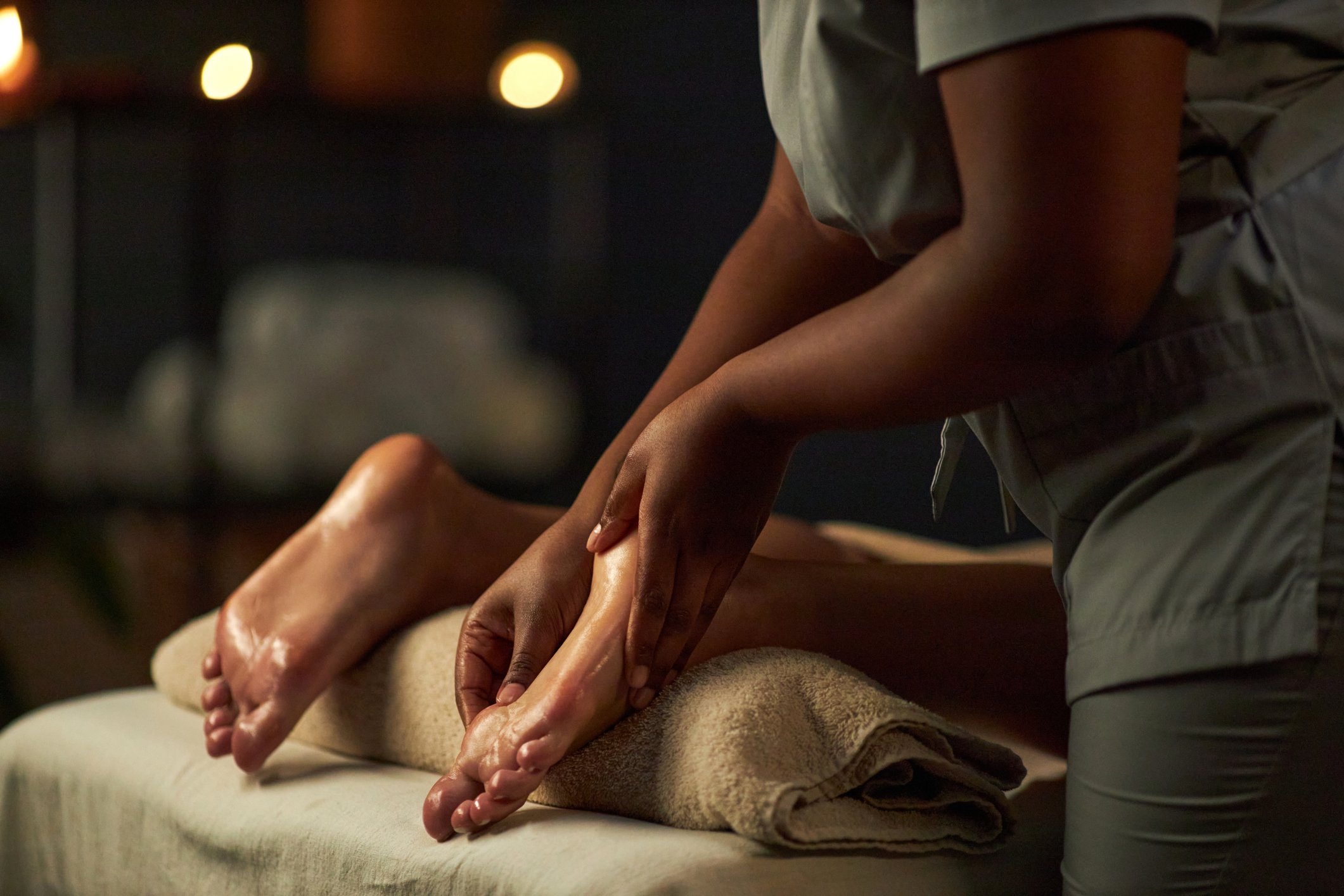
Reflexology, the practice of applying targeted pressure to specific points on the feet that correspond to organs and systems throughout the body, has a well-documented relationship with lymphatic health. The feet contain reflex points associated with the lymphatic system, including the lymph nodes of the groin, axilla, and thorax, as well as the spleen and thymus. When these points are stimulated through skilled therapeutic pressure, research suggests that lymphatic circulation can be meaningfully enhanced.
A 2025 study published in the Egyptian Nursing Journal found that Reflexology Lymph Drainage intervention produced significant reductions in breast cancer-related lymphoedema, with measurable decreases in arm circumference observed at multiple anatomical sites. Earlier feasibility research published in ScienceDirect documented volume reductions in affected limbs that appeared to be maintained for more than six months following a course of reflexology treatment. While these studies focus on clinical populations, the underlying mechanisms that make reflexology effective in those contexts apply broadly. Stimulating the lymphatic reflex zones on the feet promotes movement of lymph fluid, reduces congestion, and supports the immune filtering work that lymph nodes carry out.
At BAO FOOT SPA, every reflexology session addresses the full map of reflex points on the foot, including those associated with the lymphatic system. The Reflexology+ treatment extends this work with therapeutic add-ons designed to enhance relaxation and circulation, creating conditions in which the nervous system can shift out of the stress response and allow the body's natural detoxification processes to proceed unimpeded. For those seeking a more consistent approach, the monthly membership options, including the Classic plan with one session per month and the Premium plan with two sessions plus a complimentary add-on, provide the regularity that yields the most sustained results.
Making Lymphatic Health a Practice, Not an Event
The lymphatic system rewards consistency. Unlike acute interventions that produce dramatic short-term results, supporting lymphatic health is a practice built from daily habits and recurring therapeutic care. Movement, breathwork, hydration, and regular bodywork each contribute a layer of support that compounds over time. Spring offers a natural invitation to begin or renew that practice, to give the body the conditions it needs to move through the season with clarity and ease. If you are curious about how reflexology can be part of your approach to lymphatic and overall wellness, we welcome you to book a session at either our Santa Monica or Beverly Hills location. Our therapists are trained to work with the full complexity of the foot's reflex map, and we take genuine care in tailoring each session to the individual. The body has remarkable capacity to restore itself when given the right support.
Sources
Scallan JP, et al. "Lymphatic pumping: mechanics, mechanisms and malfunction." Journal of Physiology, 2016. https://pubmed.ncbi.nlm.nih.gov/27219461/ Broderick B, et al. "Live to Move and Move to Live: The Health of the Lymphatic System Relies on Mobility and the Foot and Calf Pump Connection." MDPI, 2023. https://www.mdpi.com/2813-3307/2/2/4 Egyptian Nursing Journal. "Effects of reflexology lymphatic drainage on lymphoedema." 2025. https://journals.lww.com/egnj/fulltext/2025/05000/effects_of_reflexology_lymphatic_drainage_on.1.aspx Woodward S, et al. "Use of reflexology in managing secondary lymphoedema for patients affected by treatments for breast cancer." ScienceDirect, 2016. https://www.sciencedirect.com/science/article/abs/pii/S1744388116300020