Spring Awakening: How Reflexology Supports Seasonal Transition
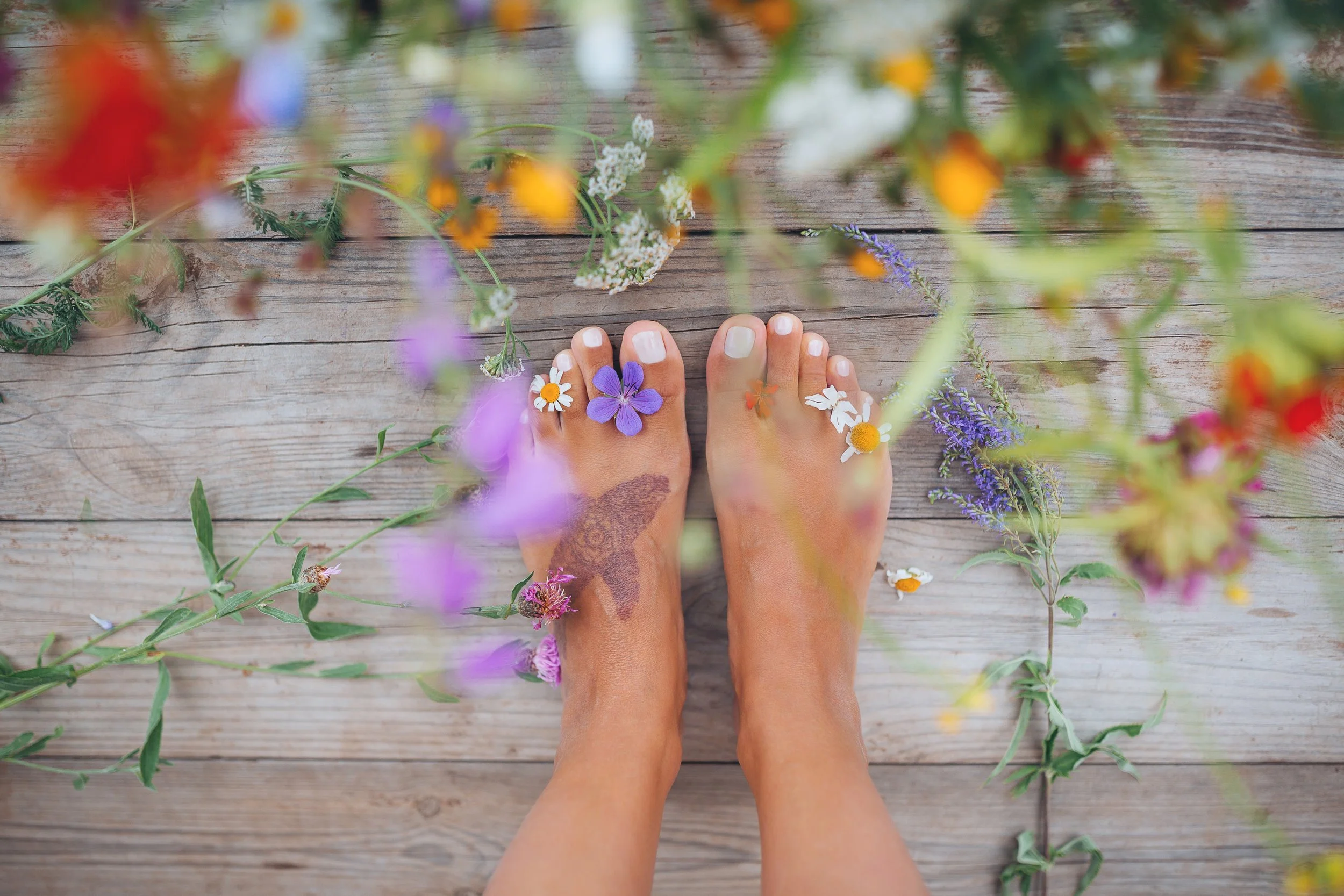
There is a quiet shift that begins to take place as winter gives way to spring. It does not arrive all at once. It is not a dramatic transformation, but rather a gradual reawakening that happens beneath the surface. The light lingers a little longer each evening. Mornings feel less heavy. And within the body, something begins to change.
This transition is often described as energizing, yet for many people it feels more complex. Energy may come in waves rather than steadily. Sleep may feel slightly altered. The body may feel both restless and fatigued at the same time. These experiences are not contradictions. They are part of a natural seasonal recalibration, as the body adjusts from the slower, inward rhythm of winter to the more active, outward energy of spring.
"The body does not change with the calendar. It changes with light, rhythm, and time."
THE BODY DOES NOT CHANGE OVERNIGHT
Seasonal transitions are often marked by dates, but the body does not operate on a calendar. It responds to environmental cues such as light exposure, temperature, and daily rhythm. As daylight increases, the circadian system begins to recalibrate, influencing sleep timing, hormone production, and energy levels.
Research from the National Institutes of Health shows that circadian rhythms are deeply influenced by light exposure, particularly in regulating melatonin and cortisol. When daylight patterns shift, these hormones adjust accordingly, but not instantly. During this transition, the body can feel slightly out of sync, as if it is catching up to the season rather than moving with it.
Dr. Phyllis Zee, a sleep and circadian rhythm expert at Northwestern University, has noted that even small changes in light exposure can significantly affect internal timing systems, reinforcing how sensitive the body is to seasonal shifts.
WHY THE BODY HOLDS ONTO WINTER

Even as spring begins externally, the body often continues operating in a winter pattern. Muscles may remain tight from reduced movement. Circulation may still feel slow. The nervous system may continue holding a low level of tension built over months of shorter days and limited sunlight.
From a physiological perspective, this is not resistance. It is adaptation. The body has been conserving energy and protecting itself through winter conditions. Releasing those patterns requires time and support.
Harvard Health Publishing explains that chronic low-level stress can increase baseline muscle tension, meaning the body holds subtle contraction even at rest. This is often why people feel physically heavy at the exact moment they expect to feel lighter.
"Tension is not just stress. It is stored adaptation waiting to be released."
REFLEXOLOGY AND THE BODY’S INTERNAL RESET
Reflexology offers a way to support this seasonal transition by working with the body’s internal communication systems. Through mapped pressure points in the feet that correspond to different organs and systems, reflexology encourages the body to move toward balance rather than intensity.
A study published in Complementary Therapies in Clinical Practice found that reflexology may significantly reduce stress and promote relaxation by activating the parasympathetic nervous system. This shift allows the body to move out of a state of constant readiness and into a state of restoration.
This is particularly important during seasonal transitions. As the body recalibrates, it benefits from signals that reinforce safety and stability. Reflexology supports this by improving circulation, encouraging relaxation, and helping regulate internal rhythms such as digestion and sleep.
SUPPORTING CIRCULATION AND ENERGY FLOW
Circulation plays a key role in how the body transitions between seasons. During winter, circulation patterns can become more restricted due to lower activity levels and colder temperatures. As spring approaches, the body begins increasing blood flow, oxygen delivery, and metabolic activity.
Reflexology can support this shift by stimulating areas associated with circulation and lymphatic movement. Improved circulation contributes to a sense of lightness, warmth, and renewed energy.
According to the Cleveland Clinic, therapies that promote circulation and relaxation can also help reduce inflammation and support overall nervous system balance, both of which are essential during periods of change.
"The goal is not to force energy. It is to support the body as it finds it."
A GENTLER WAY TO ENTER SPRING
Spring is often framed as a time for immediate renewal, productivity, and action. Yet the body rarely moves that quickly. Energy tends to build gradually, not all at once. Attempting to force that shift can create additional stress rather than ease.
Supporting the body during this time means allowing for gradual change. Gentle movement, time outdoors, consistent sleep rhythms, and body-based therapies all contribute to a smoother transition.
Dr. Andrew Huberman, a neuroscientist at Stanford University, emphasizes that consistent light exposure and nervous system regulation are among the most powerful tools for stabilizing energy and mood. These practices reinforce the body’s natural timing rather than disrupting it.
CONCLUSION
Spring awakening is not a single moment of transformation. It is a process of recalibration. As light increases and the environment shifts, the body gradually adjusts its rhythms, energy, and internal balance.
Reflexology offers a way to support this transition by encouraging relaxation, improving circulation, and helping the nervous system find stability. Rather than pushing the body into spring, it allows the transition to unfold naturally.
The body does not need to be rushed into the new season. It needs to be supported as it arrives there.